
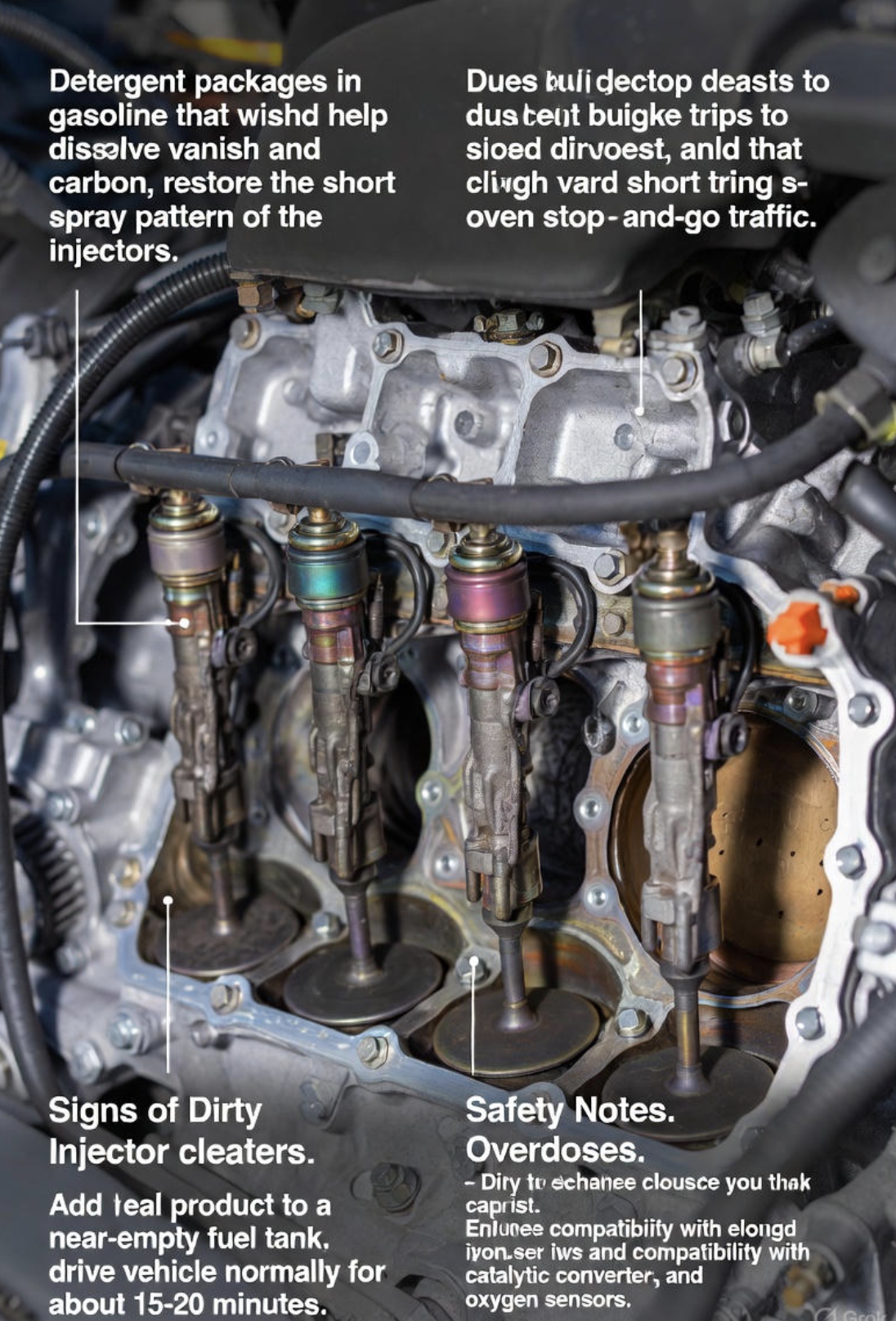
- Why injectors get dirty
- Modern gasoline forms deposits on injectors, intake valves, and the combustion chamber. Short trips, E10 fuel, and stop‑go traffic accelerate build‑up and cause rough idle and poor starts.
- What an injector cleaner actually does
- Detergent packages dissolve varnish and carbon on injector tips and intake valves, restoring spray pattern and atomization. Corrosion inhibitors also protect rails, pumps, and lines.
- Signs you should use one
- Hard starts, uneven idle, flat acceleration, increased fuel consumption, failed emissions, or engine pinging.
- How to use it (quick steps)
- Ensure the product matches your fuel type (gasoline only).
- Add the recommended dose into a near‑empty tank.
- Fill up to the specified treatment volume (e.g., 300 ml treats up to ~70 L).
- Drive normally for a full tank; benefits typically appear within 50–200 km.
- For preventive maintenance, repeat every 2,000–3,000 km or every 2–3 tanks.
- Safety and warranty notes
- Follow the label. Do not overdose. Compatible with catalytic converters and O2 sensors when used as directed.
- Realistic expectations
- Cleaners won’t fix mechanical failures, but they can recover lost performance and improve emissions if deposits are the cause.
Call to Action:
Ready to try a proven cleaner? Visit our Shop and look for “Injector Cleaner” under Additives, or contact us at 90502905 for a quick recommendation.